Choosing a demolition contractor is an important decision for any construction project. Whether the job involves a complete commercial building demolition, selective interior demolition, tenant improvement, structural removal, or preparation for a major renovation, the demolition phase establishes the conditions for everything that follows.
Contractors often work under tight deadlines. A project may have materials scheduled for delivery, subcontractors waiting to begin, tenants preparing to move into a space, or investors expecting construction milestones to be met. If demolition takes longer than expected, damages an area that was supposed to remain intact, or leaves behind excessive debris, the effects can extend well beyond the demolition phase.
That is why experienced contractors tend to evaluate demolition partners based on reliability rather than simply price.
A low bid may initially appear attractive, but the cheapest option is not necessarily the most economical choice. Poor planning, missed deadlines, inadequate cleanup, equipment problems, or unexpected complications can create additional costs that outweigh the original savings.
A strong demo partner understands the contractor’s objectives and works toward the same project goals. They arrive prepared, communicate issues quickly, follow the agreed scope, maintain a safe work environment, and leave the site ready for the next phase.
Understanding these expectations can help general contractors, construction managers, property owners, and developers make better decisions when selecting a demolition company.
Table of Contents
ToggleKey Takeaways
- Contractors want demolition partners who are reliable, experienced, and organized.
- Safety should be treated as a fundamental part of demolition planning rather than an afterthought.
- Strong communication helps prevent misunderstandings and keeps the project moving.
- A capable demo partner understands construction schedules and coordinates with other trades.
- Proper equipment can improve efficiency, precision, and worker safety.
- Selective demolition requires careful attention to structures and systems that must remain.
- Professional debris removal and site cleanup are essential parts of quality demolition work.
- Contractors value flexibility because demolition conditions can change once work begins.
- Clear scopes, documentation, and expectations help reduce disputes.
- The best demolition partner provides overall value instead of simply offering the lowest price.
What Makes A Good Demolition Partner?
A good demolition partner should bring more to the project than demolition equipment and labor. Contractors typically look for a combination of technical capability, project management, communication, safety practices, and professionalism.
The ideal partner understands how demolition fits into the larger construction process.
Relevant Experience
Experience is one of the first things contractors consider. A company that has successfully completed projects similar to the current job is more likely to understand the challenges involved.
Commercial demolition can differ significantly from residential demolition. Interior selective demolition, for example, may require crews to remove specific walls, ceilings, flooring, fixtures, or mechanical components while protecting other portions of the building.
A contractor should ask whether a potential demolition partner has experience with the specific type of work involved.
Relevant experience may include:
- Commercial demolition
- Selective interior demolition
- Tenant improvement demolition
- Structural demolition
- Concrete removal
- Interior strip-outs
- Flooring and ceiling removal
- Mechanical system removal
- Equipment removal
- Site clearing
- Building deconstruction
- Debris removal
The goal is not necessarily to find the largest demolition company. Instead, contractors should look for a company whose experience matches the project’s requirements.
Understanding Of Construction Sequencing
Demolition does not happen in isolation. It is connected to nearly every other phase of a construction project.
A good demo partner understands that the work must be completed in a way that allows subsequent trades to move forward efficiently.
For example, if a renovation requires selective removal of interior partitions, the demolition crew may need to coordinate with electrical and plumbing contractors before removing certain areas. A careless approach could damage systems that are supposed to remain in place.
Experienced demolition crews understand sequencing and recognize that removing something quickly is not always the same as removing it correctly.
Safety Is A Major Contractor Priority
Safety is one of the most important factors contractors evaluate when selecting a demolition partner.
Demolition can involve falling materials, unstable structures, dust, sharp objects, heavy equipment, electrical systems, confined spaces, and other hazards. A professional demolition company should have processes for identifying and managing these risks.
Site-Specific Safety Planning
Every demolition project has different conditions. A professional team should evaluate the site before beginning work and identify potential hazards.
This may involve considering:
- Building conditions
- Access points
- Structural elements
- Electrical systems
- Plumbing
- HVAC equipment
- Work areas
- Nearby occupants
- Equipment movement
- Material handling
- Dust control
- Debris removal
- Emergency access
A demolition plan should account for these conditions rather than relying entirely on a generic process.
Protecting Workers And Other Trades
Commercial construction sites can involve multiple companies working simultaneously. A demolition crew must work in a way that protects not only its own employees but also other workers who may be nearby.
Good communication and coordination are particularly important when demolition overlaps with other construction activities.
A reliable demo partner should understand site rules and follow the general contractor’s safety requirements.
Reliability And Schedule Performance
Contractors need demolition crews that show up when promised and complete work according to the agreed schedule.
This may sound basic, but schedule reliability can have a major effect on a construction project.
Why Demolition Delays Matter
Suppose a demolition phase is expected to take five working days but continues for another two weeks. The delay can affect:
- Framing
- Electrical installation
- Plumbing
- HVAC work
- Flooring
- Painting
- Inspections
- Material deliveries
- Final completion
A delay during the first phase can potentially create a chain reaction throughout the project.
For this reason, contractors should ask potential demolition partners about their scheduling process and availability before awarding work.
Realistic Scheduling
A professional demolition company should avoid promising an unrealistic completion date simply to win a project.
Instead, they should evaluate the scope, site conditions, access, equipment requirements, labor needs, and disposal requirements before establishing a realistic schedule.
Honest scheduling is more valuable than an overly optimistic promise.
Clear Communication
Communication is another quality contractors strongly value in a demo partner.
Demolition can reveal unexpected conditions. Once walls, ceilings, floors, or other components are removed, crews may discover conditions that were not visible during the initial walkthrough.
A good demolition partner communicates these issues promptly.
Communicating Changes
Unexpected conditions may include:
- Hidden structural components
- Unidentified utilities
- Unexpected layers of materials
- Difficult access
- Previously concealed damage
- Additional materials requiring removal
- Conditions that affect the original scope
The demolition contractor should not simply make major changes without informing the general contractor.
Instead, the issue should be explained, documented when appropriate, and discussed before proceeding with work outside the agreed scope.
Consistent Project Updates
Contractors appreciate demolition partners who provide clear updates.
Even short progress reports can help a project manager understand whether the demolition phase remains on schedule.
Good communication can include information about:
- Work completed
- Work remaining
- Schedule progress
- Site conditions
- Equipment needs
- Debris removal
- Potential issues
- Coordination requirements
This allows the general contractor to make informed decisions.
Proper Equipment And Resources
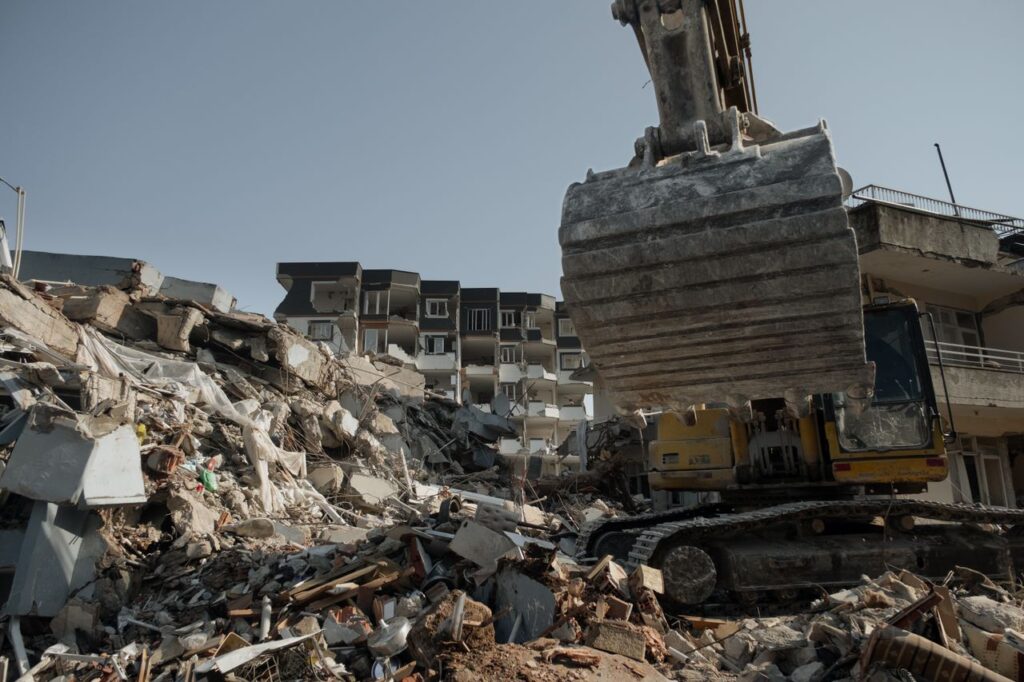
A demolition contractor’s equipment can have a major effect on productivity.
Different projects require different tools and machinery. A small interior demolition project may rely heavily on handheld equipment, while a larger project may require specialized machinery.
Equipment Selection
Depending on the project, demolition companies may use equipment such as:
- Excavators
- Skid steers
- Loaders
- Concrete breakers
- Saws
- Hydraulic tools
- Handheld demolition equipment
- Material handling equipment
- Dust-control equipment
- Containers and hauling equipment
The right equipment can improve productivity while helping crews perform work more safely and precisely.
Equipment Availability
Contractors should also consider whether the demolition company has reliable access to the equipment required for the job.
Equipment breakdowns can cause delays, especially when a company has no backup plan.
A dependable partner should have a strategy for maintaining equipment and responding to equipment-related problems.
Ability To Perform Selective Demolition
Many modern construction projects require selective demolition rather than complete destruction.
Selective demolition involves removing specific components while leaving designated structures, finishes, utilities, or systems intact.
This requires precision.
Protecting What Remains
A demolition crew may be asked to remove:
- Interior walls
- Cabinets
- Flooring
- Ceilings
- Doors
- Fixtures
- Equipment
- Nonstructural elements
- Portions of mechanical systems
At the same time, the crew may need to protect structural walls, plumbing, electrical components, HVAC systems, exterior finishes, or other areas.
A strong demo partner understands the difference between demolition and uncontrolled removal.
Attention To Detail
Selective demolition rewards careful work.
Crews need to understand the scope and identify exactly what should be removed and what should remain. Mistakes can create additional repair work and potentially affect the project’s schedule.
This is especially important during tenant improvements and occupied-building renovations.
Flexibility When Conditions Change
Construction projects rarely go exactly according to the original plan.
A demolition contractor should be capable of adapting when reasonable changes occur.
Responding To Unexpected Conditions
A flexible demo partner can help when:
- The scope changes
- Additional materials need to be removed
- Access changes
- Another trade needs part of the site sooner
- The schedule shifts
- Site conditions differ from expectations
Flexibility does not mean agreeing to every request without reviewing the implications. Instead, it means communicating professionally and finding practical solutions.
Working With Other Trades
Demolition crews may need to coordinate with electricians, plumbers, HVAC professionals, framers, flooring contractors, and other trades.
A cooperative attitude can make the entire project easier to manage.
Transparent Pricing And Scope
Contractors need to understand what they are paying for.
A professional demolition proposal should clearly describe the expected scope of work.
What A Strong Proposal Should Clarify
Depending on the project, a proposal may address:
- Labor
- Equipment
- Demolition activities
- Material removal
- Hauling
- Disposal
- Cleanup
- Project duration
- Exclusions
- Potential additional work
Clear documentation helps prevent misunderstandings.
Avoiding Unexpected Costs
A low initial estimate can become expensive if important services are excluded.
Contractors should compare proposals based on the complete scope rather than focusing exclusively on the headline price.
A slightly higher bid may provide better value if it includes the labor, equipment, hauling, cleanup, and project coordination necessary to complete the job properly.
Professionalism Matters
Professionalism can be an important indicator of how a demolition company will perform throughout a project.
Contractors should pay attention to how a potential partner communicates before the contract is signed.
Are questions answered clearly? Is the proposal organized? Does the company arrive on time for site meetings? Are expectations explained?
These early interactions can provide useful insight into how the company handles project responsibilities.
Respect For The Jobsite
Professional demolition crews should treat the construction site with respect.
That includes following site rules, maintaining orderly work areas, communicating with other workers, and addressing problems rather than ignoring them.
Professional behavior contributes to a more productive project environment.
Documentation And Project Coordination
Documentation can help contractors maintain control over a demolition project.
Depending on the scope, useful documentation may include:
- Written estimates
- Scope descriptions
- Work schedules
- Change documentation
- Progress updates
- Disposal records when applicable
- Completion confirmation
- Site photographs
Good documentation creates a clear record of what was expected and what was completed.
Why Documentation Helps
Construction projects often involve multiple parties. Written information helps ensure that everyone is working from the same understanding.
It can also make it easier to address questions that arise during construction.
How Contractors Can Evaluate A Demo Partner
Contractors should evaluate potential demolition partners systematically.
Rather than choosing a company solely because it has the lowest price, consider several factors.
Review Relevant Experience
Ask about previous projects that resemble the current job.
The most relevant experience is often more useful than a long list of unrelated projects.
Ask About The Work Process
A good demolition company should be able to explain how it approaches the project.
Ask questions about site preparation, demolition sequencing, debris handling, equipment, scheduling, and cleanup.
Evaluate Communication
Pay attention to response times and clarity during the bidding process.
If communication is difficult before the project begins, it may become more challenging once the work is underway.
Compare Complete Proposals
Look beyond the total price.
Compare what each proposal includes and excludes.
Discuss Scheduling Early
Confirm that the demolition contractor can accommodate the project’s required timeline.
Consider Overall Value
The best partner is generally the one that provides the right combination of experience, safety, reliability, communication, efficiency, and cost.
Building A Long-Term Relationship With A Demo Partner
General contractors often benefit from developing relationships with dependable subcontractors.
A demolition company that consistently performs well can become a valuable part of a contractor’s network.
Consistency Creates Trust
When a demo partner repeatedly demonstrates reliability, contractors can have greater confidence when assigning future projects.
Over time, the two companies may develop better communication and coordination.
Familiarity With Project Expectations
A returning demolition partner may already understand the contractor’s preferred communication methods, scheduling practices, documentation requirements, and jobsite expectations.
That familiarity can improve efficiency.
Why The Right Demo Partner Adds Value
A demolition contractor does more than remove materials.
The right partner can help protect the construction schedule, reduce unnecessary disruption, improve jobsite organization, and prepare the site for the next phase.
This is particularly important when demolition is performed in an active commercial environment.
A professional approach can help minimize avoidable problems and keep the overall project moving.
The value of a demolition contractor should therefore be measured by the entire contribution to the project rather than simply the cost of demolition itself.
Conclusion
So, what do contractors look for in a demo partner?
They look for reliability, experience, safety, communication, organization, appropriate equipment, scheduling discipline, flexibility, and professionalism. They want a demolition company that understands the larger construction process and recognizes that successful demolition is about more than removing materials.
A strong demo partner arrives prepared, understands the scope, protects areas that need to remain, coordinates with other trades, manages debris efficiently, communicates unexpected conditions, and completes work according to the agreed expectations.
Price is certainly an important consideration, but it should not be the only factor. A demolition company that saves money on the initial bid but causes delays, damage, cleanup problems, or communication issues may ultimately cost the project more.
The best approach is to evaluate demolition contractors based on overall value. Look for a company with relevant experience, a safety-focused process, reliable scheduling, clear communication, appropriate resources, and a reputation for completing work professionally.
When a demolition contractor operates as a true project partner, the benefits extend beyond the demolition phase. A clean, organized, properly prepared site gives the next trades a better starting point and helps the entire construction project move toward completion more efficiently.
Frequently Asked Questions
1. What Is The Most Important Quality In A Demolition Partner?
Reliability is one of the most important qualities. Contractors need a demolition partner that can perform the agreed scope safely, communicate effectively, and meet the project’s schedule.
2. Should Contractors Always Choose The Lowest Demolition Bid?
No. The lowest bid may not represent the best overall value. Contractors should compare the complete scope, schedule, equipment, debris removal, cleanup, communication, and experience before making a decision.
3. Why Is Demolition Experience Important?
Experience helps crews recognize potential problems, understand demolition sequencing, operate equipment effectively, and work safely around structures and systems that need to remain.
4. What Should A Demolition Proposal Include?
A proposal should clearly describe the demolition scope and, when applicable, address labor, equipment, material removal, hauling, disposal, cleanup, schedule, exclusions, and additional-work procedures.
5. Why Is Communication Important During Demolition?
Demolition can uncover unexpected conditions. Prompt communication allows contractors and project managers to evaluate those issues before they create larger schedule or cost problems.
6. What Is Selective Demolition?
Selective demolition involves removing specific portions of a building or interior while preserving designated structures, systems, finishes, or other components.
7. How Does Demolition Affect The Construction Schedule?
Demolition is often the first major construction activity. Delays during demolition can prevent other trades from beginning their work, potentially affecting the entire project schedule.
8. What Equipment Should A Demolition Contractor Have?
Equipment requirements depend on the project. Depending on the scope, a demolition company may need excavators, skid steers, loaders, concrete breakers, saws, hydraulic tools, handheld equipment, and material-handling resources.
9. How Can Contractors Avoid Demolition Problems?
Contractors can reduce problems by establishing a clear scope, discussing site conditions, confirming the schedule, reviewing the demolition process, selecting an experienced partner, and maintaining consistent communication.
10. Why Should Contractors Build Relationships With Demolition Companies?
A reliable long-term demo partner can become familiar with a contractor’s expectations, communication style, scheduling requirements, and jobsite procedures. This familiarity can improve efficiency on future projects.
11. Does Cleanup Matter When Choosing A Demolition Contractor?
Yes. Proper debris removal and cleanup help prepare the site for subsequent construction activities. Contractors should confirm exactly what cleanup and hauling services are included in the project scope.
12. What Makes A Demolition Company A True Project Partner?
A true project partner understands that demolition is connected to the larger construction process. They communicate clearly, work safely, coordinate with other trades, respect the schedule, manage the site responsibly, and focus on helping the overall project succeed.
Commercial Demolition Services That Clear The Way For What’s Next
Every successful renovation, buildout, or redevelopment project starts with a clean slate. Junked: Powered by Veterans™ provides professional commercial demolition services throughout the Bay Area, helping property owners, contractors, businesses, and property managers remove what’s no longer needed and prepare the space for its next phase.
Whether you’re gutting an office, clearing out a retail space, preparing a restaurant for renovation, removing interior walls and fixtures, or getting a commercial property ready for construction, our veteran-led crew is equipped to handle the job safely and efficiently.
We don’t just tear things out. We help keep your project moving.
Commercial Demolition Without The Headaches
- Interior Demolition: Walls, ceilings, flooring, cabinetry, fixtures, built-ins, and other interior components.
- Office, Retail & Restaurant Demolition: Clearouts and demolition for remodels, tenant improvements, relocations, and new buildouts.
- Warehouse & Commercial Property Demolition: Removal of unwanted structures, improvements, equipment areas, and other materials.
- Complete Debris Removal: Once the demolition is finished, we haul away the debris and leave the site clean and ready for the next trade.
- Reliable Scheduling: We understand that delays can affect every stage of a commercial project, so we show up ready to work and keep the job moving.
- Veteran-Led Professionalism: Clear communication, dependable crews, organized work areas, and a strong commitment to doing the job right.
Clear It Out. Clean It Up. Move The Project Forward.
Commercial demolition is often the first major step in transforming a property. The faster and cleaner that step gets done, the sooner your contractors can get to work on what comes next.
Junked: Powered by Veterans™ makes the process simple by combining demolition, debris removal, and cleanup into one dependable service.
If you’re planning a commercial renovation, tenant improvement, property redevelopment, or buildout in the Bay Area, let us handle the demolition and heavy lifting.
Disclaimer
The materials available on this website are for informational and entertainment purposes only and not to provide legal or professional advice. You should contact your attorney or home improvement specialist for advice concerning any particular issue or problem. You should not act or refrain from acting based on any content included in this site without seeking legal or other professional advice. The information presented on this website may not reflect the most current home improvement developments. No action should be taken based on the information on this website. We disclaim all liability concerning actions taken or not taken based on any or all of the contents of this site to the fullest extent permitted by law.