Commercial demolition is the controlled process of dismantling, removing, or completely taking down a commercial building or a portion of one. Unlike ordinary building removal, commercial demolition involves careful planning, specialized equipment, trained crews, safety procedures, environmental considerations, waste management, and coordination with property owners, contractors, engineers, utility providers, and local authorities.
Commercial demolition may be necessary for many reasons. A property owner might want to remove an outdated office building and construct a modern facility in its place. A developer may need to clear an older retail structure before beginning a redevelopment project. A business might need to remove part of an existing building to make room for an expansion. In other situations, demolition may be required because a structure has suffered major fire, storm, water, or structural damage.
Although demolition can look straightforward from the outside, professional commercial demolition is a highly organized process. A successful project begins long before heavy equipment arrives at the site. Contractors must evaluate the structure, identify potential hazards, plan how materials will be removed, determine what can be salvaged or recycled, establish safety controls, and coordinate the work so the surrounding property and public areas remain protected.
The method used also depends on the type and condition of the building. A small commercial interior renovation may require selective demolition, while a large concrete or steel structure may require heavy machinery and specialized dismantling techniques.
Understanding what commercial demolition involves can help property owners, developers, facility managers, and business owners prepare for a project and make informed decisions when selecting a demolition contractor.
Table of Contents
ToggleKey Takeaways
- Commercial demolition involves the controlled removal of commercial structures or selected portions of them.
- Projects can involve complete building demolition, interior demolition, structural dismantling, or selective demolition.
- Planning and site assessment are essential before demolition begins.
- Contractors must identify structural, environmental, utility, and public-safety hazards.
- Permits, inspections, notifications, and other local requirements may apply depending on the project and jurisdiction.
- Utility disconnection and verification are critical before structural work begins.
- Hazardous materials must be identified and handled through appropriate procedures.
- Heavy equipment may include excavators, loaders, skid steers, breakers, shears, and other specialized machinery.
- Demolition crews typically separate reusable and recyclable materials from general debris.
- Dust, noise, vibration, traffic, and neighboring properties must be considered during the project.
- A professional demolition contractor develops a site-specific safety and demolition plan.
- Proper debris removal and site preparation are important parts of completing the project.
- The final goal is not simply to tear down a building but to leave the property safe, controlled, and ready for its next phase.
What Is Commercial Demolition?
Commercial demolition is the professional dismantling or removal of structures used for business, retail, industrial, institutional, or other commercial purposes.
The term can refer to several different types of work. In some projects, an entire building is demolished and removed. In others, only certain areas are taken apart while the remaining structure stays in use.
Examples of commercial structures that may undergo demolition include:
- Office buildings
- Retail stores
- Shopping centers
- Restaurants
- Warehouses
- Industrial facilities
- Hotels
- Apartment or mixed-use structures
- Medical and healthcare facilities
- Schools and institutional buildings
- Manufacturing facilities
- Commercial parking structures
- Interior spaces within larger commercial properties
The scale and complexity of the project can vary dramatically. Removing interior walls from a vacant office may be relatively contained, while dismantling a multi-story reinforced-concrete building can require extensive engineering, equipment, and planning.
The defining characteristic of professional demolition is control. The structure is removed according to a planned sequence rather than simply being destroyed without preparation.
How Is Commercial Demolition Different From Residential Demolition?
Commercial and residential demolition share many fundamental principles, but commercial projects are often larger and more complex.
A residential demolition project might involve removing a single-family home, detached garage, or small structure. Commercial demolition may involve multi-story buildings, large floor areas, substantial structural systems, complex utilities, and neighboring businesses.
Commercial projects can also have stricter logistical requirements because they may take place in busy areas where pedestrians, traffic, neighboring properties, and active businesses are nearby.
Commercial demolition may require coordination involving:
- Property owners
- Developers
- General contractors
- Structural engineers
- Architects
- Environmental specialists
- Utility companies
- Local authorities
- Safety professionals
- Waste and recycling facilities
- Transportation providers
Another difference is the amount of documentation and planning that can be involved. Large commercial projects may require detailed demolition plans, engineering reviews, environmental assessments, site logistics plans, and other project-specific documentation.
What Types Of Commercial Demolition Are Available?
Commercial demolition is not limited to completely destroying a building. Contractors use different approaches depending on the project’s goals.
Complete Demolition
Complete demolition involves removing the entire structure from the site.
This approach may be used when:
- A building has reached the end of its useful life.
- A developer wants to construct a new facility.
- The existing structure is severely damaged.
- The property needs substantial redevelopment.
- Renovation would not be economically practical.
After the building is removed, the contractor generally processes the resulting debris and prepares the site according to the project’s scope.
Selective Demolition
Selective demolition involves removing specific portions of a building while preserving other areas.
For example, a contractor may remove:
- Interior walls
- Flooring
- Ceilings
- Mechanical systems
- Electrical components
- Plumbing
- Fixtures
- Exterior sections
- Specific structural elements
Selective demolition is common during commercial renovations because the goal is to remove outdated components without unnecessarily damaging portions of the building that will remain.
Interior Demolition
Interior demolition focuses on removing interior elements while leaving the building’s main structure and exterior shell intact.
It may be used when a company is renovating an office, restaurant, retail space, medical facility, or other commercial property.
Interior demolition can include removing partitions, cabinetry, flooring, ceiling systems, fixtures, mechanical equipment, and other interior components.
Structural Demolition
Structural demolition involves removing major structural components of a building.
Because structural systems carry loads, this type of demolition requires careful planning. Removing the wrong component at the wrong time can create serious instability.
Structural demolition may involve steel, reinforced concrete, masonry, timber, or combinations of different materials.
Dismantling And Deconstruction
Some projects emphasize dismantling or deconstruction rather than conventional demolition.
Instead of rapidly reducing the building to debris, crews carefully remove components in a controlled sequence. Materials may then be salvaged for reuse or recycling.
This approach can be particularly useful when a project owner wants to maximize material recovery or preserve architectural components.
Why Is Commercial Demolition Planning So Important?
Demolition planning is one of the most important stages of a commercial project.
A building may look simple from the outside, but its interior can contain complicated structural and mechanical systems.
Before work begins, contractors need to understand:
- How the building was constructed
- Which components carry loads
- Where utilities enter the property
- Where hazardous materials may be present
- How debris will be removed
- What equipment can safely access the site
- Where workers and machinery will operate
- How neighboring properties will be protected
- How dust and noise will be controlled
- How emergency situations will be handled
A demolition plan establishes the sequence of work and helps the crew anticipate potential hazards.
Poor planning can lead to delays, unexpected costs, safety incidents, property damage, and inefficient material handling.
Conduct A Property And Structural Assessment
Before demolition begins, the contractor evaluates the building and surrounding site.
This assessment may involve reviewing available building plans, inspecting structural components, examining utilities, and identifying potential hazards.
The contractor may document:
- Building dimensions
- Number of floors
- Structural materials
- Structural condition
- Access points
- Utility locations
- Adjacent structures
- Road access
- Site restrictions
- Potential environmental hazards
- Areas requiring special protection
Structural engineers may be involved when the building’s stability or demolition sequence requires specialized analysis.
The goal is to understand how the structure behaves so the demolition can proceed in a controlled manner.
Identify Hazardous Materials
Older commercial buildings may contain materials that require specialized handling.
Depending on the age and construction of the building, potential hazardous materials can include asbestos-containing materials, lead-based coatings, certain chemicals, contaminated materials, or other substances.
The presence of a hazardous material does not necessarily prevent demolition, but it can change how the project must be performed.
Appropriate inspection, testing, containment, removal, transportation, and disposal procedures may be required.
A professional demolition contractor should not simply assume that a building is free of hazardous materials because none are immediately visible.
Review Permits And Local Requirements
Commercial demolition projects can be subject to local requirements.
Depending on the jurisdiction and project, approvals may address:
- Demolition permits
- Building permits
- Environmental requirements
- Utility disconnection
- Dust control
- Noise restrictions
- Traffic management
- Public right-of-way use
- Waste disposal
- Hazardous material handling
- Site protection
Requirements vary by location, building type, project scope, and other factors.
For that reason, property owners should work with their demolition contractor and relevant professionals to determine what approvals and documentation are required before work begins.
Starting demolition without addressing applicable requirements can result in delays, penalties, or other complications.
Disconnect Utilities
Utility disconnection is one of the most important safety steps.
A commercial building may contain electricity, natural gas, water, telecommunications, fire protection systems, and other services.
Utilities must be appropriately identified and disconnected before demolition activities create risks.
Simply turning off a switch inside the building may not be enough. Utility connections can extend beyond the visible interior of the property.
The contractor coordinates with appropriate utility providers and verifies that services have been properly addressed before proceeding.
This step helps prevent electrical incidents, gas leaks, flooding, and other potentially dangerous situations.
Prepare The Site
Once planning and preliminary requirements are addressed, the site is prepared for demolition.
Preparation may include installing:
- Temporary fencing
- Warning signs
- Controlled access points
- Protective barriers
- Dust-control equipment
- Safety zones
- Temporary structures
- Traffic controls
The contractor may also establish designated areas for machinery, workers, debris, recyclable materials, and equipment.
Site preparation helps keep unauthorized people away from the demolition area and creates an organized workflow.
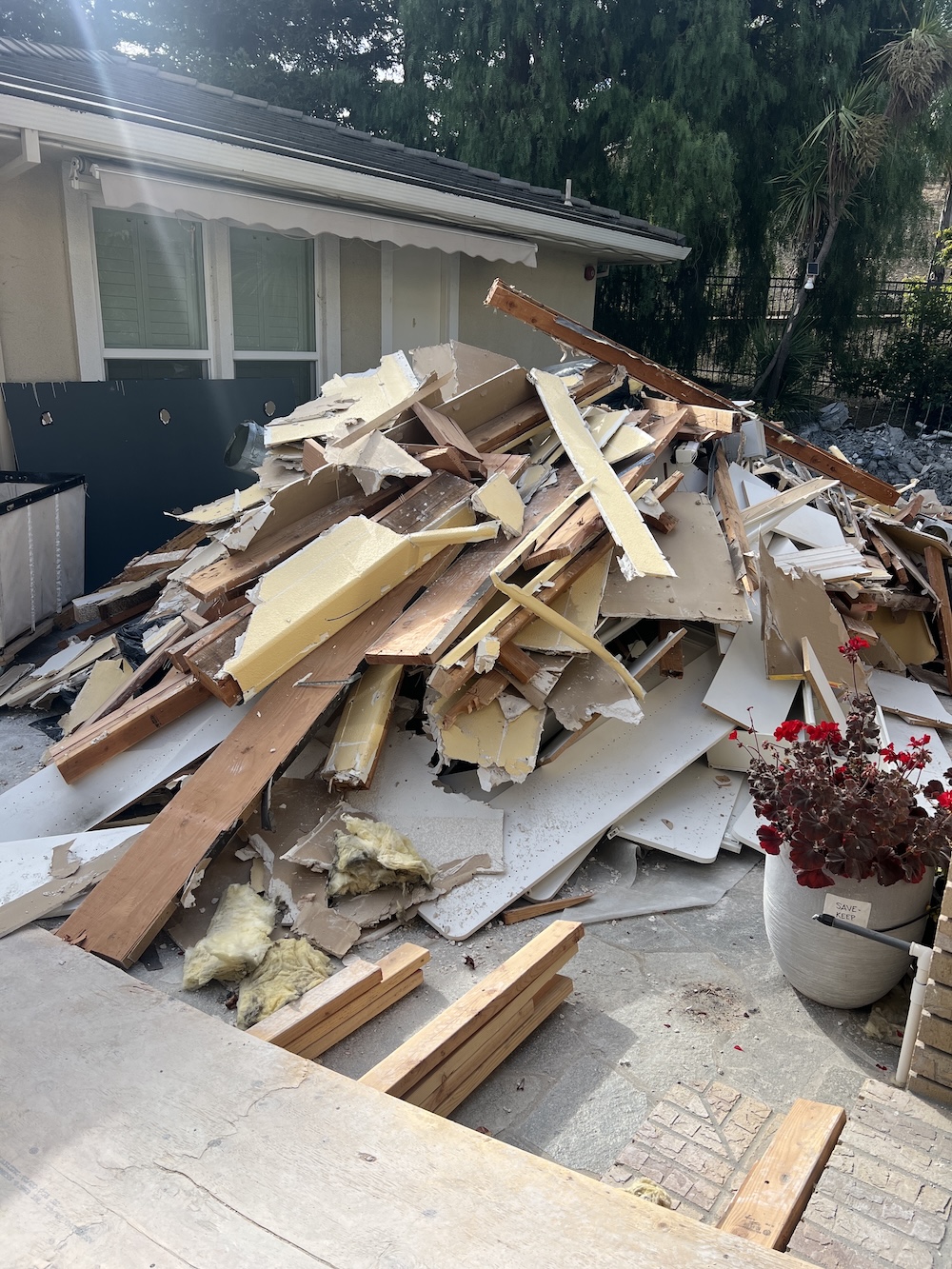
Perform Soft Strip Or Interior Removal
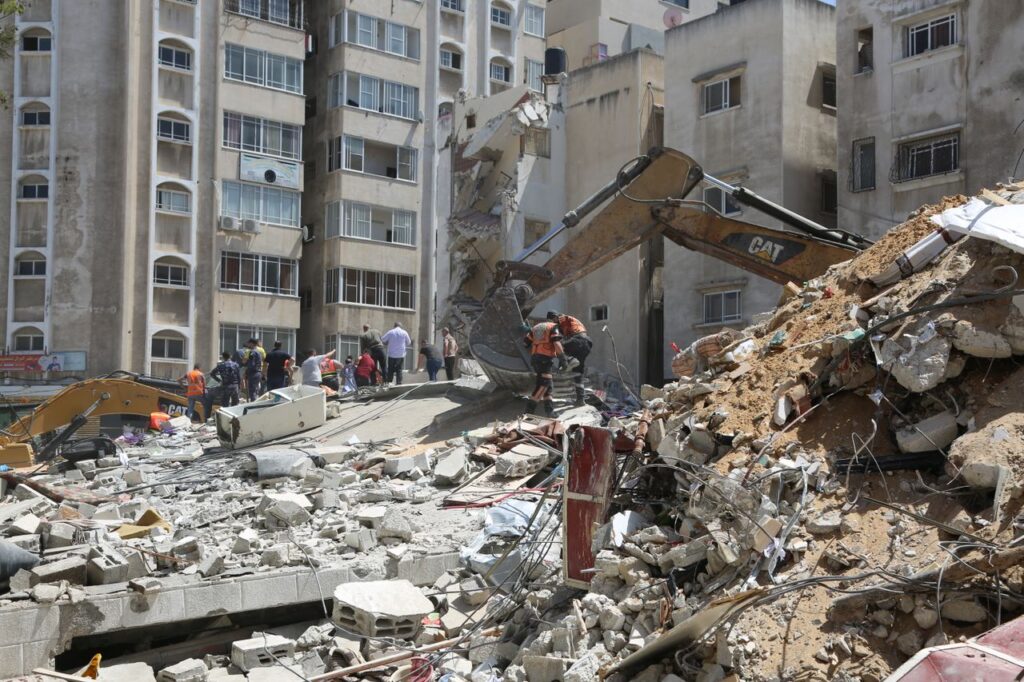
Many commercial demolition projects begin with a soft-strip phase.
Soft stripping involves removing non-structural elements before major structural demolition begins.
Depending on the building, this may include:
- Furniture
- Fixtures
- Cabinets
- Doors
- Flooring
- Ceiling tiles
- Light fixtures
- Appliances
- Non-structural partitions
- Mechanical components
- Plumbing fixtures
- Electrical components
Soft stripping can make subsequent structural demolition more efficient.
It can also allow workers to separate materials more effectively and identify hidden conditions before heavy equipment enters the building.
Begin Structural Demolition
After the site is prepared and non-structural elements have been removed, the contractor proceeds with structural demolition according to the established plan.
The method depends on the building.
Possible equipment includes:
- Excavators
- Hydraulic breakers
- Concrete pulverizers
- Hydraulic shears
- Grapples
- Skid steers
- Wheel loaders
- Cranes
- Specialized demolition attachments
For certain buildings, mechanical demolition is the most efficient method.
For other structures, controlled dismantling or specialized techniques may be more appropriate.
The contractor selects equipment based on building height, materials, access limitations, structural conditions, surrounding properties, and safety requirements.
How Does Mechanical Demolition Work?
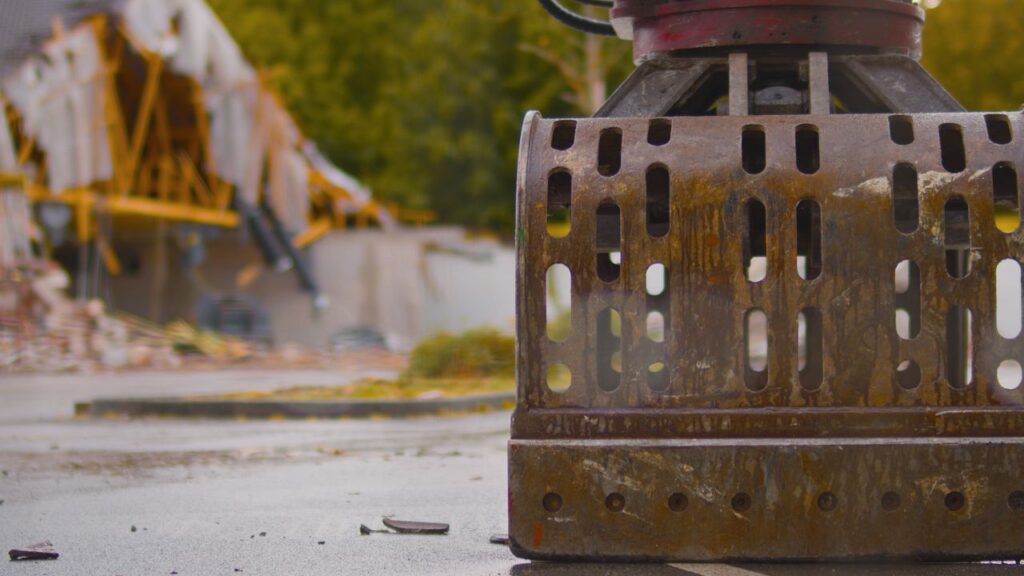
Mechanical demolition uses heavy machinery and specialized attachments to dismantle or reduce structures.
An excavator equipped with a hydraulic attachment may break concrete, cut steel, pull apart structural components, or process debris.
For example, a concrete pulverizer can crush concrete into smaller pieces, while a hydraulic shear can cut metal components.
The operator follows the planned demolition sequence and works within designated safety zones.
Mechanical demolition can be efficient, but it still requires precision. Equipment operators must understand the building’s behavior and avoid actions that could cause uncontrolled collapse.
How Does Selective Demolition Work?
Selective demolition is generally more controlled than full structural removal.
The crew identifies which components must be removed and which must remain.
For example, during an office renovation, workers may remove interior partitions and outdated mechanical systems while preserving the exterior walls, structural frame, elevators, or other systems.
Selective demolition requires careful separation between demolition areas and protected areas.
This is particularly important when portions of the building remain occupied or when neighboring structures share walls or other components.
How Are Tall Commercial Buildings Demolished?
Tall buildings require particularly careful planning.
Traditional approaches may involve dismantling the building from the top downward, using specialized equipment, cranes, or machinery positioned at appropriate levels.
The exact method depends on the building’s structural system, location, height, surrounding properties, and available access.
A demolition contractor may coordinate with structural engineers to determine the safest sequence.
In dense urban environments, controlling falling materials, vibration, dust, noise, and pedestrian access becomes especially important.
What Safety Measures Are Used During Commercial Demolition?
Safety is a central part of every demolition project.
Potential hazards include:
- Falling materials
- Structural instability
- Heavy machinery
- Dust
- Noise
- Electrical hazards
- Hazardous materials
- Fire
- Confined spaces
- Unexpected voids
- Traffic
- Nearby pedestrians
- Underground utilities
Professional crews use multiple layers of controls to reduce these risks.
Controlled Access
Only authorized workers should enter active demolition zones.
Fencing, barriers, signs, security measures, and designated access points can help prevent unauthorized entry.
Personal Protective Equipment
Workers may use appropriate protective equipment based on the hazards present.
This can include:
- Hard hats
- Safety glasses
- Gloves
- High-visibility clothing
- Protective footwear
- Hearing protection
- Respiratory protection where appropriate
- Fall-protection equipment
The exact equipment depends on the work being performed and site conditions.
Equipment Inspection
Demolition machinery should be inspected and maintained before and during use.
Operators must also be trained and qualified to operate the equipment they use.
Dust Control
Demolition can generate substantial dust, particularly when concrete, masonry, drywall, and other materials are broken apart.
Dust-control measures may include controlled water application, barriers, ventilation, filtration, and other site-specific techniques.
Effective dust management protects workers, neighboring properties, and the surrounding community.
How Is Noise And Vibration Controlled?
Commercial demolition can generate significant noise and vibration.
Contractors may need to consider nearby:
- Businesses
- Homes
- Hospitals
- Schools
- Transit facilities
- Roads
- Sensitive equipment
- Historic structures
Noise and vibration control can involve selecting appropriate equipment, adjusting work schedules, monitoring conditions, and establishing communication procedures with nearby stakeholders.
In sensitive environments, vibration monitoring may be used to identify whether demolition activity is affecting neighboring structures.
How Is Demolition Debris Managed?
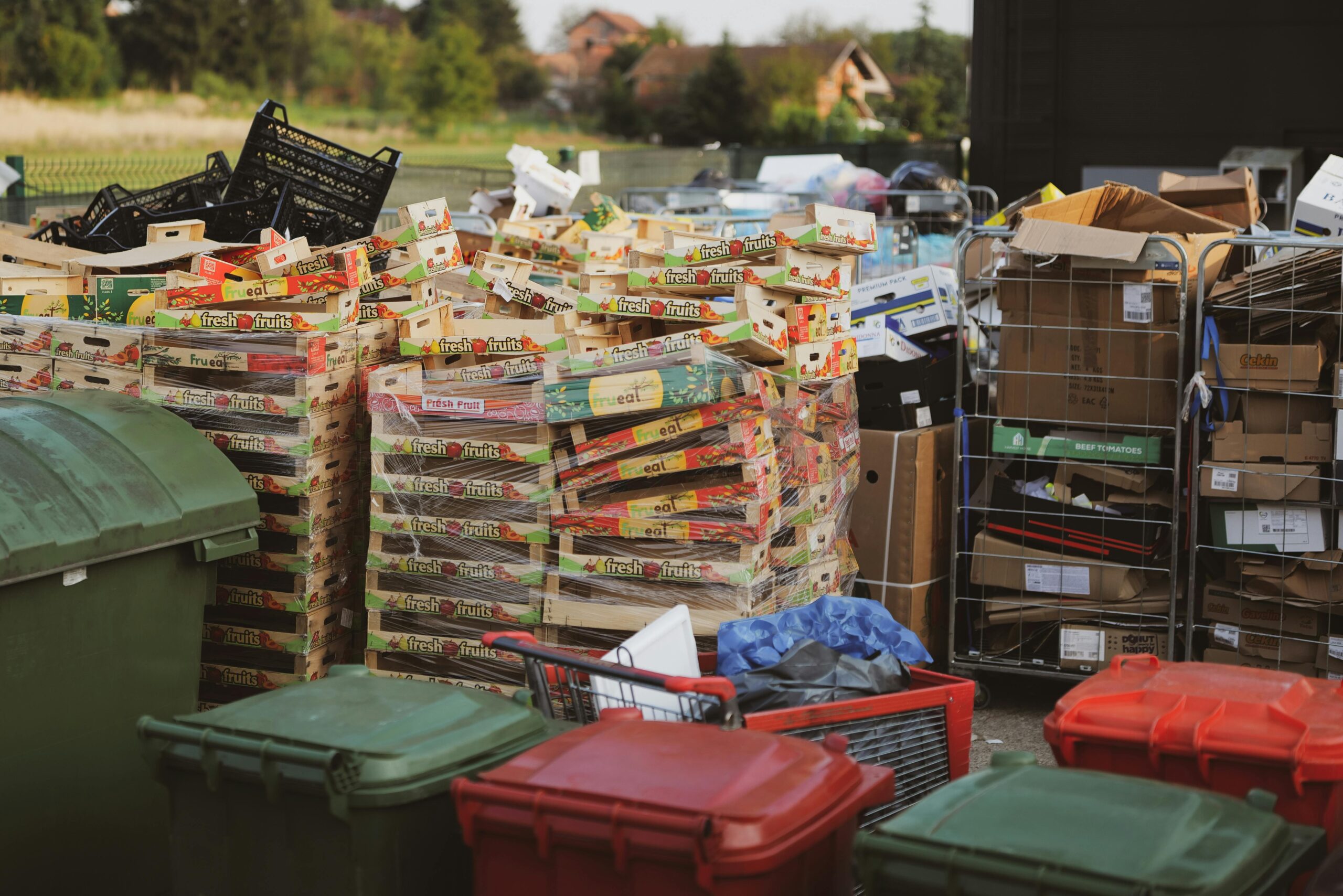
Demolition produces large quantities of material.
Common materials include:
- Concrete
- Brick
- Masonry
- Steel
- Wood
- Drywall
- Glass
- Plastics
- Roofing materials
- Insulation
- Fixtures
- Electrical components
Professional demolition companies develop a debris-management strategy before work begins.
Materials may be separated into categories for reuse, recycling, processing, or disposal.
Can Commercial Demolition Materials Be Recycled?
Yes. Many demolition materials can be recovered or recycled.
Concrete And Masonry
Concrete can often be processed into aggregate for certain construction applications.
Brick and masonry may also be recovered depending on condition and project requirements.
Steel And Other Metals
Steel, copper, aluminum, and other metals can often be separated and sent to recycling facilities.
Metal recovery can reduce the amount of material sent to landfills.
Wood
Certain wood materials may be reused, processed, or recycled depending on their condition and whether they are contaminated.
Fixtures And Architectural Elements
Some projects may allow doors, lighting, fixtures, cabinetry, architectural features, or other components to be salvaged.
Deconstruction and selective demolition can increase the potential for material recovery.
What Happens To The Site After Demolition?
Demolition does not necessarily end when the building is gone.
The contractor may need to:
- Remove remaining debris
- Process recyclable materials
- Remove foundations
- Remove underground structures when included in the scope
- Grade the site
- Compact soil
- Remove temporary protections
- Clean access areas
- Prepare the property for subsequent construction
The final site condition depends on the contract and the next phase of development.
Some projects require a completely cleared and graded lot, while others may only require removal of a specific structure or interior components.
What Factors Affect The Cost Of Commercial Demolition?
Commercial demolition costs vary substantially.
Important factors include:
Building Size
Larger buildings generally require more labor, equipment, transportation, and disposal capacity.
Building Materials
Concrete, steel, masonry, timber, and mixed-material buildings require different equipment and methods.
Building Height
Tall structures may require more complex access, sequencing, engineering, and safety measures.
Site Accessibility
A property with limited access can be more difficult and expensive to demolish than an open site with convenient equipment access.
Hazardous Materials
Testing, containment, specialized labor, transportation, and disposal of hazardous materials can significantly affect project costs.
Location
Projects in dense commercial districts may involve additional traffic controls, public protection, logistical planning, and operating restrictions.
Recycling and Disposal
The quantity and type of debris affect transportation and processing costs.
Selective Versus Complete Demolition
Selective demolition can require more manual labor and precision because workers must protect components that remain.
How Long Does Commercial Demolition Take?
There is no universal timeline.
A small interior demolition could potentially take days or weeks, while a large commercial building may require substantially longer.
The timeline can depend on:
- Building size
- Structural complexity
- Demolition method
- Permitting
- Hazardous material procedures
- Utility coordination
- Weather
- Site accessibility
- Debris volume
- Recycling requirements
- Neighboring property constraints
Planning and approvals can also affect the overall schedule.
Property owners should request a project-specific timeline rather than relying on a generic estimate.
What Should You Look For In A Commercial Demolition Contractor?
Choosing the right contractor is one of the most important decisions in a demolition project.
Look for a company with:
Relevant Experience
Commercial demolition is different from small residential demolition. The contractor should have experience with projects of comparable size and complexity.
Appropriate Equipment
The company should have access to equipment suited to the building and planned demolition method.
Safety Practices
Ask about worker training, site controls, equipment maintenance, and safety planning.
Proper Licensing And Insurance
Verify that the contractor maintains applicable licensing, insurance, and other credentials required for the project and location.
Environmental Procedures
A qualified contractor should understand hazardous-material procedures, recycling opportunities, and responsible debris management.
Clear Project Scope
The contract should clearly explain what will be removed, what will remain, who is responsible for permits and utility coordination, how debris will be handled, and what condition the site will be left in.
Common Mistakes To Avoid
Treating Demolition As Simple Destruction
Demolition is a technical construction activity. Treating it as simply knocking down a building can lead to safety and logistical problems.
Failing To Investigate The Structure
Unexpected structural conditions can disrupt a project.
A thorough assessment helps reduce surprises.
Ignoring Hazardous Materials
Potential hazardous materials should be evaluated before demolition begins.
Forgetting Utility Coordination
Unverified utilities can create serious hazards.
Choosing A Contractor Based Only On Price
The lowest estimate may not represent the best overall value.
Safety, experience, equipment, environmental practices, project management, and site restoration should also be considered.
Failing To Plan Debris Management
A demolition project can produce enormous amounts of waste. Without a disposal and recycling strategy, material can accumulate and slow the project.
What Are The Benefits Of Professional Commercial Demolition?
Hiring an experienced demolition contractor offers several potential advantages.
Improved Safety
Professional contractors understand demolition hazards and can establish appropriate safety controls.
Greater Efficiency
Experienced crews know how to sequence work and use equipment effectively.
Better Material Management
Professional demolition can improve the separation and recovery of recyclable materials.
Reduced Risk To Surrounding Properties
Careful planning can help protect neighboring buildings, roads, utilities, and public areas.
Better Project Coordination
A qualified contractor can coordinate demolition with other construction professionals and project schedules.
Site Readiness
The contractor can prepare the property for the next stage of development according to the agreed scope.
Environmental Considerations In Commercial Demolition
Modern demolition projects increasingly emphasize responsible material management.
Instead of sending every demolished component to a landfill, contractors may identify opportunities to recover useful materials.
Environmental planning can include:
- Recycling metals
- Processing concrete
- Salvaging fixtures
- Reusing materials
- Properly handling hazardous substances
- Reducing unnecessary transportation
- Controlling dust
- Preventing spills
- Managing stormwater
- Maintaining clean work areas
The environmental strategy should be appropriate to the project’s location, materials, and applicable requirements.
How Does Commercial Demolition Prepare A Property For Redevelopment?
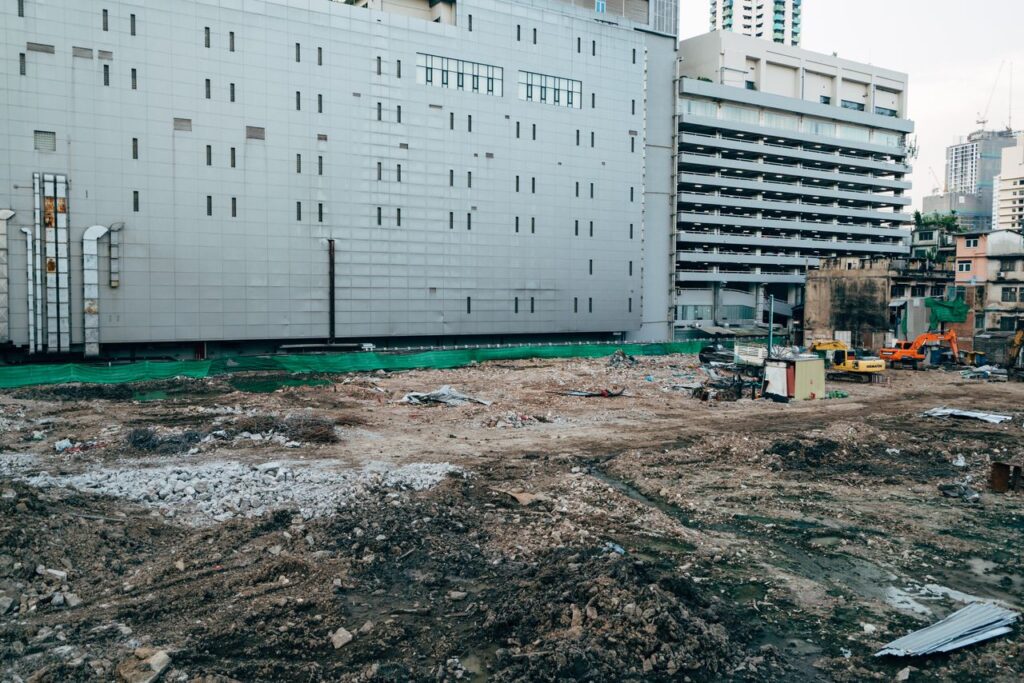
Demolition is often the first major step in transforming an existing property.
A developer may remove an outdated building to create space for:
- A new office
- Retail development
- Industrial facilities
- Housing
- Mixed-use development
- Parking
- Public or institutional improvements
- Infrastructure
A properly completed demolition project provides a clean and controlled starting point for the next construction phase.
Coordination between the demolition contractor and the future construction team can help ensure that the site is prepared according to the project’s requirements.
Conclusion
Commercial demolition is a carefully planned construction activity rather than simply the destruction of a building. From initial property assessment and structural planning to utility disconnection, site preparation, controlled demolition, debris management, recycling, and final cleanup, every stage plays an important role in a successful project.
The right demolition approach depends on the building and the project’s objectives. Complete demolition may be appropriate when an entire property is being redeveloped, while selective or interior demolition may be better for renovations where significant portions of the existing structure will remain.
Safety is one of the most important considerations throughout the process. Commercial structures can contain complex structural systems, utilities, hazardous materials, and other conditions that are not obvious from the outside. Professional contractors use planning, trained personnel, specialized machinery, controlled access, protective measures, and appropriate procedures to manage these risks.
Environmental responsibility is also an increasingly important part of demolition. Concrete, steel, wood, fixtures, and other materials may be recycled or salvaged rather than automatically sent to a landfill. Proper hazardous-material handling and dust management can further reduce environmental and community impacts.
For property owners and developers, choosing an experienced commercial demolition contractor can make the entire process more predictable. A qualified contractor can evaluate the property, develop a practical demolition strategy, coordinate necessary activities, manage equipment and labor, handle debris, and prepare the site for the next phase.
Ultimately, successful commercial demolition is about much more than taking down a structure. It is about carefully managing the transition from an existing property to a safe, organized, and usable site ready for renovation, redevelopment, or new construction.
Frequently Asked Questions
1. What Is Commercial Demolition?
Commercial demolition is the planned and controlled removal of commercial buildings or selected portions of them. It can involve complete building removal, interior demolition, selective demolition, structural dismantling, or deconstruction.
2. How Does Commercial Demolition Work?
The process typically involves assessment, planning, applicable approvals, utility coordination, site preparation, hazardous-material evaluation, interior or soft stripping, structural demolition, debris management, recycling or disposal, and final site cleanup.
3. Does Commercial Demolition Require A Permit?
Many commercial demolition projects require permits or other approvals, but requirements vary by jurisdiction and project scope. Property owners and contractors should confirm local requirements before beginning work.
4. What Equipment Is Used For Commercial Demolition?
Equipment can include excavators, loaders, skid steers, hydraulic breakers, concrete pulverizers, shears, grapples, cranes, and other specialized demolition attachments.
5. Can A Commercial Building Be Partially Demolished?
Yes. Selective demolition allows contractors to remove specific areas or components while preserving other portions of the building.
6. What Happens To Demolition Debris?
Debris can be sorted for recycling, reuse, processing, or disposal. Concrete, metals, wood, and other materials may have different recovery options.
7. How Are Utilities Handled Before Demolition?
Utilities such as electricity, gas, water, telecommunications, and other services must be identified and appropriately disconnected or isolated before demolition begins. Verification is an important part of the process.
8. How Do Contractors Protect Neighboring Buildings?
Contractors can use controlled demolition sequences, protective barriers, dust suppression, vibration monitoring, equipment controls, exclusion zones, and other measures appropriate to the site.
9. Is Commercial Demolition Dangerous?
Demolition involves significant hazards, including falling materials, structural instability, machinery, dust, utilities, and hazardous materials. Professional planning, trained workers, proper equipment, and site controls are essential.
10. Can Old Commercial Buildings Contain Hazardous Materials?
Yes. Depending on the building’s age and construction, hazardous materials may be present. Appropriate inspection and testing can help identify materials that require specialized handling.
11. How Long Does Commercial Demolition Take?
The timeline varies based on building size, structure, demolition method, permits, hazardous materials, accessibility, debris volume, weather, and site restrictions. A project-specific schedule provides the most accurate estimate.
12. How Much Does Commercial Demolition Cost?
Costs vary widely depending on the size and type of building, materials, location, access, hazardous materials, demolition method, labor, equipment, and debris disposal. A contractor should inspect the property before providing a meaningful estimate.
13. Is Commercial Demolition Environmentally Friendly?
Demolition can have environmental impacts, but responsible practices can reduce them. Recycling, material recovery, proper hazardous-material handling, dust control, and efficient debris management can help reduce unnecessary waste.
14. What Is Selective Commercial Demolition?
Selective demolition involves removing specific components while preserving the rest of the building. It is frequently used for commercial renovations and redevelopment projects.
15. What Is Soft Demolition?
Soft demolition, often called soft stripping, involves removing non-structural interior components such as fixtures, flooring, ceilings, partitions, and equipment before major structural work begins.
16. Can Demolition Materials Be Reused?
Yes. Some materials and components can potentially be salvaged for reuse. The feasibility depends on their condition, contamination status, project requirements, and available recovery opportunities.
17. Why Is Structural Engineering Important For Demolition?
Structural engineering can help determine how a building carries loads and how components should be removed safely. This is particularly important for complex, tall, damaged, or structurally unusual buildings.
18. Can Demolition Damage Nearby Structures?
Poorly planned demolition can create risks for nearby structures. Professional contractors use site assessments, controlled sequences, protective measures, and monitoring when appropriate to reduce those risks.
19. What Should A Property Owner Do Before Hiring A Demolition Contractor?
Property owners should understand the project scope, identify the structure to be removed, gather available building information, determine applicable approvals, evaluate hazardous-material concerns, and obtain proposals from qualified contractors.
20. What Is The Main Goal Of Commercial Demolition?
The goal is to safely and efficiently remove the designated structure or components while protecting workers, the public, surrounding property, and the environment, ultimately leaving the site ready for its next intended use.
Commercial Demolition Services That Clear The Way For What’s Next
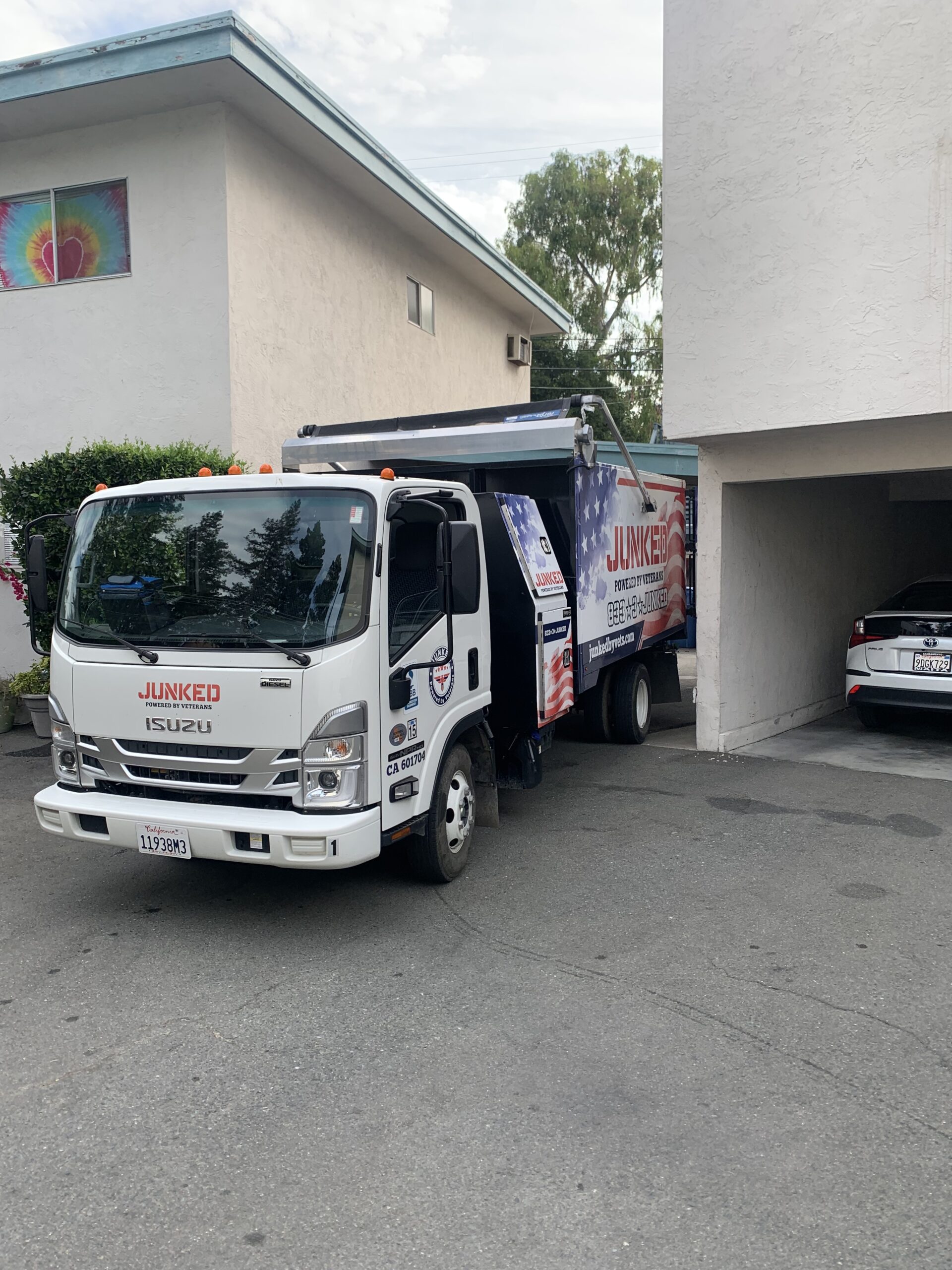
Every successful renovation, buildout, or redevelopment project starts with a clean slate. Junked: Powered by Veterans™ provides professional commercial demolition services throughout the Bay Area, helping property owners, contractors, businesses, and property managers remove what’s no longer needed and prepare the space for its next phase.
Whether you’re gutting an office, clearing out a retail space, preparing a restaurant for renovation, removing interior walls and fixtures, or getting a commercial property ready for construction, our veteran-led crew is equipped to handle the job safely and efficiently.
We don’t just tear things out. We help keep your project moving.
Commercial Demolition Without The Headaches
- Interior Demolition: Walls, ceilings, flooring, cabinetry, fixtures, built-ins, and other interior components.
- Office, Retail & Restaurant Demolition: Clearouts and demolition for remodels, tenant improvements, relocations, and new buildouts.
- Warehouse & Commercial Property Demolition: Removal of unwanted structures, improvements, equipment areas, and other materials.
- Complete Debris Removal: Once the demolition is finished, we haul away the debris and leave the site clean and ready for the next trade.
- Reliable Scheduling: We understand that delays can affect every stage of a commercial project, so we show up ready to work and keep the job moving.
- Veteran-Led Professionalism: Clear communication, dependable crews, organized work areas, and a strong commitment to doing the job right.
Clear It Out. Clean It Up. Move The Project Forward.
Commercial demolition is often the first major step in transforming a property. The faster and cleaner that step gets done, the sooner your contractors can get to work on what comes next.
Junked: Powered by Veterans™ makes the process simple by combining demolition, debris removal, and cleanup into one dependable service.
If you’re planning a commercial renovation, tenant improvement, property redevelopment, or buildout in the Bay Area, let us handle the demolition and heavy lifting.
Disclaimer
The materials available on this website are for informational and entertainment purposes only and not to provide legal or professional advice. You should contact your attorney or home improvement specialist for advice concerning any particular issue or problem. You should not act or refrain from acting based on any content included in this site without seeking legal or other professional advice. The information presented on this website may not reflect the most current home improvement developments. No action should be taken based on the information on this website. We disclaim all liability concerning actions taken or not taken based on any or all of the contents of this site to the fullest extent permitted by law.