Property managers are responsible for keeping rental properties functional, presentable, and ready for the people who live in them. That responsibility becomes more complicated when a tenant moves out and leaves furniture, unwanted belongings, household trash, or accumulated clutter behind. Before cleaners, painters, and maintenance workers can do their jobs effectively, someone must clear the space.
A rental property cleanout can look simple during an initial walkthrough. A couch needs to go, a few boxes remain in a closet, and the garage appears to contain ordinary household items. Once work begins, however, the task may involve awkward lifting, several vehicle trips, sorting decisions, difficult access, and questions about where different materials should go.
A professional cleanout company can help property managers organize that work and carry out an agreed removal plan. Depending on the provider and service agreement, the crew may handle sorting, lifting, loading, hauling, and arranging appropriate disposal or recycling for accepted materials. This support can give the management team more time to coordinate repairs, communicate with owners, and prepare the property for its next resident.
The strongest reason to hire a professional is practical: a well-planned cleanout can make an otherwise unpredictable part of turnover easier to manage. The benefits depend on choosing a capable company, confirming the scope, and giving clear instructions. Professional help does not automatically make every job faster or cheaper, but it can improve coordination when the removal workload exceeds the time, equipment, or capacity available in-house.
Table of Contents
ToggleKey Takeaways
- Professional cleanouts can help clear the way for inspections, repairs, painting, and detailed cleaning.
- Comparing total costs gives a more useful picture than comparing a hauling quote with staff wages alone.
- Suitable equipment, staffing, and handling methods matter when removing heavy or awkward items.
- Written instructions should identify what to remove, what to preserve, and when the crew should stop for clarification.
- Recycling, donation, and special handling depend on item condition, local options, and the provider’s accepted materials.
- Cleanout work and deep cleaning are separate services unless the agreement specifically includes both.
- Property managers remain responsible for deciding which belongings are authorized for removal.
- A reliable provider can support repeatable turnover procedures across multiple units or properties.

What Does A Professional Property Cleanout Company Do?
A property cleanout company removes specified unwanted contents from a property and transports accepted materials to their agreed destinations. The work may involve a single room, an entire apartment, a rental house, a garage, or several storage areas.
The service is especially useful when the contents cannot be handled conveniently through ordinary trash collection. Bulky furniture, large volumes of bagged waste, and items located far from a loading area can all create a more demanding removal job.
Common Items Included In A Cleanout
Depending on the company, accepted items may include couches, chairs, tables, mattresses, bed frames, shelving, boxes, household clutter, and certain appliances. Some companies also handle outdoor furniture, garage contents, or selected renovation debris.
Acceptance should be confirmed before scheduling. A company that removes ordinary household furniture may have different policies for electronics, refrigerant-containing appliances, unusually heavy objects, or construction materials.
Describe the contents as accurately as possible. Photos of each room, storage space, and access route can help the provider assess the job, although an on-site inspection may still be necessary for complex conditions.
The Difference Between Removal And Cleaning
A cleared property is easier to clean, but removal alone does not make it ready for occupancy. Sweeping up loose debris is different from washing cabinets, cleaning appliances, sanitizing bathrooms, or treating flooring.
Ask what condition the crew will leave behind. If the agreement includes only removal and a basic sweep, arrange detailed cleaning separately. Clear service boundaries help prevent a scheduling gap between an empty unit and a finished turnover.
How Professional Cleanouts Support Faster Turnovers
A property cannot progress efficiently through turnover when unwanted contents block access to rooms, walls, floors, or equipment. Clearing those obstacles creates working space for the next trades and gives managers a better view of the property’s condition.
The benefit comes from fitting removal into the overall schedule. A cleanout booked without access arrangements or before removal decisions are finalized may create delays of its own.
Clear The Way For Maintenance And Inspections
Furniture can conceal damaged flooring, marked walls, or areas that require attention. Storage clutter can make it difficult to reach plumbing access points, appliance connections, and other locations needed for maintenance.
Once authorized contents are removed, the management team can reassess the unit and refine its repair plan. That may prevent a painter or flooring contractor from arriving only to discover that the work area remains inaccessible.
An empty room can also reveal work that was not apparent during the first walkthrough. Leave room in the schedule for those discoveries rather than treating the cleanout as proof that all remaining tasks are already known.
Coordinate The Order Of Work
A practical sequence often begins with documentation and removal decisions, followed by cleanout, condition assessment, repairs, and final cleaning. Some tasks can overlap, but the access needs of each crew should determine the schedule.
For example, a maintenance technician may be able to repair a bathroom while furniture is removed from a bedroom. Two crews attempting to use the same narrow hallway, however, may slow each other down.
Give each vendor a clear arrival window and explain who will be working on-site. A professional cleanout can support a shorter turnover only when the surrounding work is coordinated.
Why Outsourcing Can Reduce Staff Workload
Property managers and maintenance teams already handle competing responsibilities. A substantial cleanout can absorb the hours needed for resident requests, inspections, leasing coordination, or repairs at occupied units.
Outsourcing provides additional capacity without requiring the management team to perform every part of the removal itself. Managers still need to define the task and inspect the result, but they can delegate the physical work within that scope.
Preserve Maintenance Time For Skilled Work
A technician assigned to haul furniture may be unavailable to resolve a plumbing problem or repair a door. Even when the technician can perform both tasks, the property manager must decide which use of that time best serves the portfolio.
For a small removal, in-house handling may be sensible. For several furnished rooms or a crowded garage, an outside crew may allow maintenance employees to stay focused on repairs.
The decision should reflect actual workload. Hiring help is most useful when it resolves a capacity problem or supplies equipment and skills the existing team does not have readily available.
Reduce Repeated Administrative Tasks
A cleanout can require truck arrangements, disposal research, staff scheduling, equipment collection, and several trips. If one provider can handle the agreed activities, the manager may have fewer separate arrangements to coordinate.
That convenience depends on clear communication. A single vendor does not simplify matters if the manager must repeatedly chase arrival updates or clarify an incomplete estimate.
Ask who will serve as the point of contact, how changes will be approved, and what information the crew needs before arrival. These details help turn delegation into a useful reduction in workload.
How Professional Handling Can Help Protect The Property
Removing bulky items involves more than carrying them toward a truck. Tight turns, narrow stairways, door thresholds, and finished surfaces can make the route difficult.
A capable crew should assess these conditions and explain how it will manage the work. Hiring professionals does not eliminate damage risk, but careful planning and appropriate equipment can help reduce avoidable problems.
Plan Around Difficult Access
A large dresser may need partial disassembly before it can pass through a doorway. A heavy appliance may require a suitable dolly and a clear route. A long carry from the unit to the loading area may affect staffing and time.
Tell the provider about stairs, elevator restrictions, low ceilings, narrow gates, and limited parking. Photographs of the route can be as important as photographs of the contents.
Do not assume a crew can solve every access problem on arrival. If an item appears too large for the available opening, discuss it before committing to a schedule.
Agree On Surface Protection And Damage Reporting
Ask whether the company uses floor coverings, corner protection, moving blankets, or other measures where needed. Explain any sensitive flooring or recently finished surfaces.
Record existing damage before work begins, and inspect the removal route afterward. If a new concern appears, report it promptly with photographs and a clear description.
Also review relevant insurance information and the company’s damage-reporting procedure. These are useful parts of vendor evaluation, although coverage details and responsibility depend on the actual policy and agreement.
Why Appropriate Material Handling Matters
A rental cleanout can contain several different material categories. Furniture, recyclable metal, electronics, ordinary waste, and chemical products may require different destinations or handling arrangements.
A professional provider should be able to explain what it accepts and how those materials will be managed. Vague statements that everything will simply be taken away are not enough for a complex job.
Identify Items That Need Special Attention
The U.S. Environmental Protection Agency identifies products such as paints, cleaners, oils, batteries, and pesticides as possible household hazardous waste that requires care during disposal. These materials should be identified separately when planning a cleanout. US EPA
Ask the provider whether it accepts each material and whether a separate service or destination is necessary. If the crew discovers an unknown substance, it should pause and notify the manager rather than mix it into the ordinary load.
Eligibility for local collection programs can vary, including whether a program accepts materials delivered by a business. Confirm the applicable arrangements before assuming a household drop-off option will work for a commercial cleanout.
Set Realistic Recycling And Donation Expectations
Usable furniture may be suitable for donation, and some materials may be recyclable. Actual options depend on condition, available recipients, facility acceptance, and the provider’s service.
A damaged sofa, stained mattress, or incomplete cabinet may not be accepted for reuse. Ask whether donation attempts are included and what happens if a recipient declines an item.
Where documentation matters, request available receipts or destination records in advance. Avoid assuming that every item will be donated or that the provider can guarantee a particular diversion percentage without job-specific evidence.

How To Evaluate The Total Cost Of A Cleanout
The lowest advertised price does not necessarily represent the lowest completed cost. Property managers should compare quotes that cover the same contents, access conditions, labor, and finishing standard.
In-house removal also has costs, even when no outside invoice is issued. Staff time, transportation, equipment, disposal charges, and disrupted work all affect the comparison.
Understand The Pricing Method
Some companies price by the volume occupied in a truck. Others use labor time, weight, a minimum service charge, or a fixed quote based on the assessed scope.
Ask how the method applies to your job. An estimate for a few items near a driveway may differ substantially from the cost of clearing several rooms on an upper floor.
Confirm potential charges for additional loads, difficult carries, disassembly, heavy materials, or items with separate processing fees. Written assumptions make it easier to understand why the final price might change.
Compare Complete Scenarios
Consider a unit with several furniture pieces and a storage room full of boxes. The in-house option may involve staff labor, a rented vehicle, fuel, equipment, and disposal fees. The professional option may combine those activities into one agreed price.
Compare those complete scenarios using realistic estimates. Do not count uncertain future savings as guaranteed benefits, and do not assume professional removal always costs less.
The useful question is whether the quoted service provides good value for the workload, timing, and capacity constraints of that particular property.
Why Documentation And Removal Instructions Are Essential
A professional crew can carry out removal decisions, but it should not be expected to decide which belongings the manager has authority to discard. That determination needs to be settled before the work begins.
Written instructions also help protect items that resemble unwanted clutter but still have a purpose. A labeled box of spare cabinet hardware, for example, may be valuable to maintenance staff even if it looks like miscellaneous leftovers.
Separate Removal Decisions From Hauling Work
Before authorizing removal, resolve any uncertainty about ownership, required handling, or the status of remaining belongings. Obtain qualified local guidance when those questions require it.
Tell the crew which areas and items are approved for removal. If the crew finds contents that were not included in the instructions, provide a way to contact the manager before proceeding.
A provider’s willingness to take an item does not establish permission to discard it. Keeping that distinction clear helps prevent avoidable disputes and mistakes.
Create A Useful Completion Record
Take photographs before the cleanout and after the agreed work is finished. Keep the estimate, work order, approved changes, invoice, and any disposal or donation records supplied.
Completion photographs should show the rooms and storage areas included in the scope, along with any items intentionally left behind. This makes the record useful for the owner and the next vendor.
Documentation does not need to be elaborate. It needs to show what was requested, what changed, and what remains for the next stage of turnover.
When Is Professional Help Most Useful?
Professional cleanouts are particularly useful when the quantity, weight, access conditions, or deadline make in-house handling impractical. They can also help when several properties require removal work at the same time.
The decision does not need to be all-or-nothing. A manager might use employees for ordinary bagged waste and hire a crew for bulky items, provided the division of work is clear.
Large Or Difficult Removal Jobs
An entire furnished unit, a packed garage, or several oversized items may justify a dedicated crew. These jobs can require more equipment and coordination than a routine trash pickup.
The provider should still evaluate unusual conditions before starting. Severe contamination, unstable structures, suspected hazardous building materials, or other specialized conditions may require assessment by a different professional.
A competent cleanout company should recognize the limits of its service and explain when additional help is needed.
Busy Turnover Periods
When staff are already occupied with repairs and resident needs, outsourced removal can provide useful flexibility. Advance scheduling is especially helpful when multiple move-outs are expected close together.
Professional help may be less necessary for a small, accessible load that trained staff can handle within normal operations. Consider the actual workload rather than treating outside service as the default for every vacancy.
How Property Managers Can Prepare For A Cleanout
Preparation makes the work easier to estimate and reduces decisions that would otherwise interrupt the crew. Start with a complete walkthrough, including closets, exterior storage, garages, and other spaces within the approved scope.
Then give the provider a concise set of instructions and a reliable contact method for questions during the job.
Confirm Contents And Access
Photograph the removal items and mark anything that should remain. Explain key arrangements, gate codes, loading locations, stairs, and elevator procedures.
Check that the loading route will be available at the scheduled time. If other vendors are working nearby, coordinate their needs before the crew arrives.
Avoid asking workers to disconnect unfamiliar utilities or handle uncertain materials without an agreed plan. Clarify those tasks during preparation so the required provider can be scheduled.
Conduct A Final Walkthrough
Before the crew leaves, compare the result with the scope. Check rooms, closets, balconies, and storage areas included in the agreement.
Look for remaining approved items, damage concerns, and loose debris beyond the agreed finishing standard. Record any exceptions and explain what additional work is needed.
Then notify the next vendor that the space is available. A clear handoff turns completed removal into progress on the overall turnover schedule.
Building A Repeatable Cleanout Process
A recurring process can help property managers avoid starting from scratch with every vacancy. Use a simple template for photographs, removal lists, access notes, estimate approvals, and completion records.
Keep the template flexible enough to reflect differences between units. Repeating the process should improve clarity without encouraging crews to make assumptions about unfamiliar properties.
Track Performance Over Time
Record whether the provider arrived within the agreed window, completed the scope, communicated changes, and left the property in the promised condition.
Compare estimates with invoices and note the reason for any difference. A higher final price caused by newly authorized work is different from an unexplained charge.
Over several jobs, these records can help identify whether the relationship is improving turnover coordination and providing consistent value.
Keep An Alternative Provider Available
An established vendor relationship can simplify scheduling, but availability and capacity may vary. Maintain an alternative contact for periods when the regular provider cannot meet the property’s needs.
Use the same clear scope and approval process with both providers. That consistency makes their services easier to compare and gives management a dependable way to organize removal work.
Conclusion
Property managers should consider a professional cleanout company when removal work would otherwise consume too much staff time, delay other vendors, or require equipment and capacity that are not readily available. A capable provider can clear authorized contents, organize hauling, and help create a more predictable handoff to repairs and cleaning.
The value comes from matching the service to the property. Clear instructions, realistic scheduling, written pricing assumptions, and a final walkthrough matter as much as the crew’s ability to lift and load.
Before booking, document the contents, settle removal decisions, identify anything requiring special handling, and compare complete costs. With those steps in place, professional cleanout support can become a useful part of a well-organized rental turnover process.
Frequently Asked Questions
1. What Is The Main Benefit Of Hiring A Professional Cleanout Company?
The main benefit is additional capacity for an organized removal job. A suitable crew can handle agreed lifting, loading, and hauling while the property manager coordinates repairs, cleaning, and leasing tasks. The value depends on the size and complexity of the cleanout.
2. Can A Professional Cleanout Reduce Vacancy Time?
It can help when unwanted contents are delaying inspections or other work. Removing those contents on schedule may allow repairs and cleaning to begin sooner. Vacancy duration also depends on the property’s condition, vendor availability, leasing activity, and other factors outside the cleanout company’s control.
3. Is Professional Removal Cheaper Than Using Maintenance Staff?
Sometimes, but the result depends on the job. Compare the professional quote with staff time, transportation, equipment, disposal fees, and the effect on other maintenance work. A small accessible load may be economical in-house, while a larger job may justify outside help.
4. Does A Cleanout Service Include Deep Cleaning?
Not automatically. Some providers offer only removal and a basic sweep, while others provide additional cleaning services. Ask whether bathrooms, appliances, cabinets, windows, and flooring are included. Schedule separate cleaners when those tasks fall outside the agreement.
5. Can A Company Clean Out Several Units During One Visit?
Some companies can, depending on crew size, vehicle capacity, access, and the amount of material. Request a plan for the specific units involved. Use separate removal instructions for each unit and confirm how the provider will handle loading and multiple trips.
6. What Should Managers Do With Belongings That May Still Belong To A Tenant?
Resolve the status of those belongings before authorizing disposal. The hauling crew should receive instructions identifying approved removal items and anything that must remain. Where ownership or required handling is uncertain, obtain qualified local guidance before the work proceeds.
7. Can All Cleanout Contents Be Donated Or Recycled?
No. Donation and recycling depend on condition, material type, receiving-facility policies, and available services. Damaged or contaminated items may be unsuitable for reuse. Ask the company what destinations it uses and whether it can provide relevant records for the materials it handles.
8. How Should Managers Handle Paint, Chemicals, Or Unknown Containers?
Identify them separately and ask whether the provider accepts them. Do not assume ordinary junk removal covers those materials. Confirm suitable handling arrangements with the appropriate local service, and instruct the crew to pause if it discovers an unknown substance during the cleanout.
9. What Information Is Needed For An Accurate Estimate?
Provide photographs, an item list, the approximate volume, and details about stairs, elevators, loading distance, parking, and special materials. Identify any disassembly or additional cleaning requested. A complex job may need an on-site assessment before the provider can give a firm quote.
10. How Can Property Managers Confirm The Cleanout Is Complete?
Compare the finished property with the written scope. Inspect included rooms and storage areas, confirm retained items remain, and document any exceptions. Keep completion photographs, the invoice, and approved changes so the owner and subsequent vendors have a clear record of the work.
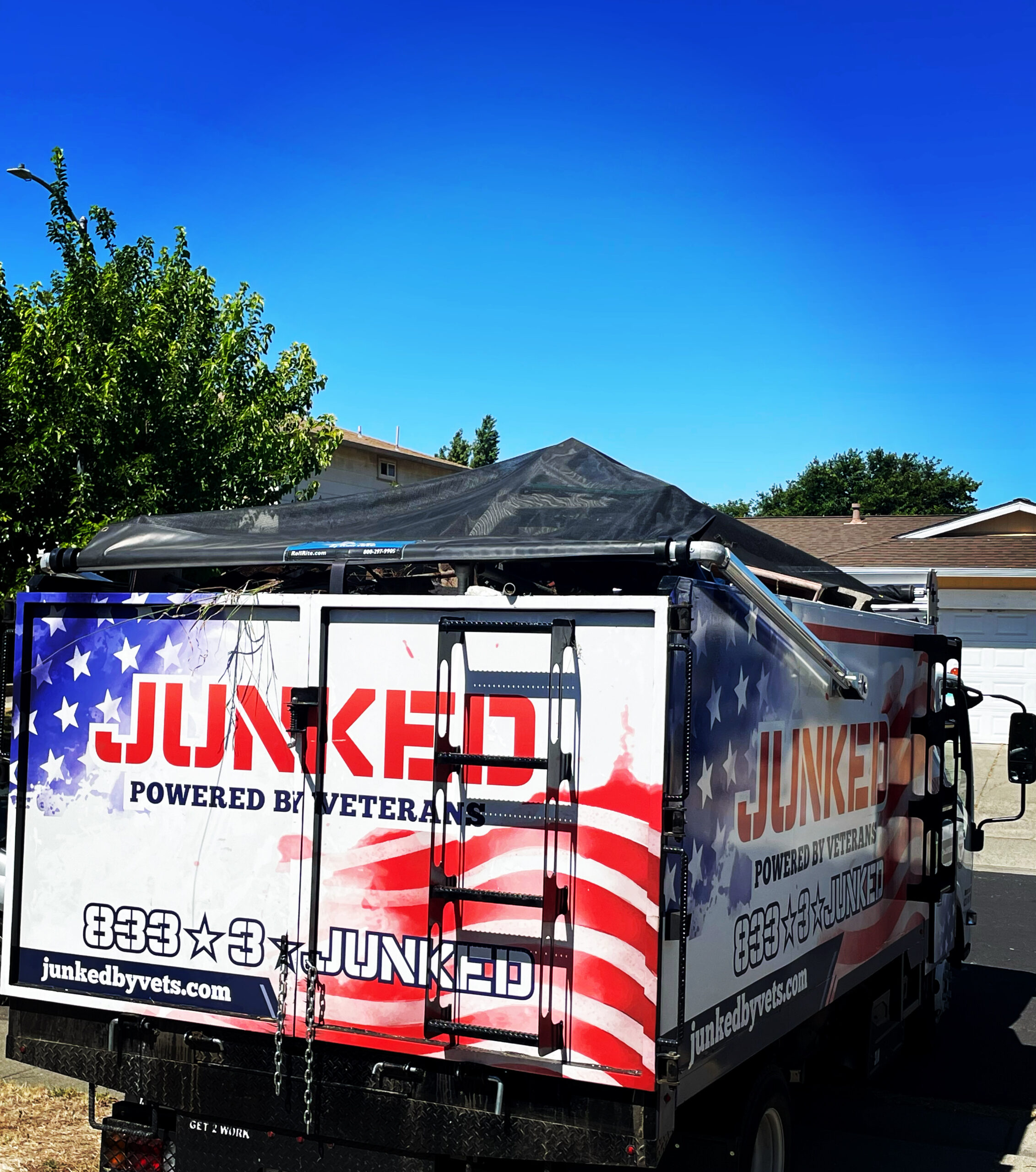
Need A Rental Property Cleared Fast? Here’s Why Bay Area Property Pros Choose Junked: Powered By Veterans™
Rental property and tenant turnover cleanouts can quickly become a challenge, especially when former tenants leave behind furniture, appliances, trash, or other unwanted items. At Junked: Powered by Veterans™, we help Bay Area landlords, property managers, real estate professionals, and property owners clear out rentals quickly and get them ready for the next tenant.
Whether you’re dealing with an apartment move-out, preparing a rental home for new occupants, clearing an abandoned unit, or getting a property ready for repairs and renovations, our veteran-led team handles the heavy lifting from start to finish. We remove unwanted items efficiently, prioritize responsible disposal whenever possible, and help you move forward with less downtime between tenants.
If you need a rental property or tenant turnover cleanout in the Bay Area, schedule your free, no-obligation estimate and see why so many property professionals trust Junked: Powered by Veterans™ for reliable, efficient, and stress-free service.
Disclaimer
The materials available on this website are for informational and entertainment purposes only and not to provide legal or professional advice. You should contact your attorney or home improvement specialist for advice concerning any particular issue or problem. You should not act or refrain from acting based on any content included in this site without seeking legal or other professional advice. The information presented on this website may not reflect the most current home improvement developments. No action should be taken based on the information on this website. We disclaim all liability concerning actions taken or not taken based on any or all of the contents of this site to the fullest extent permitted by law.